Help protect and share the world’s cultural heritage
Your 100% tax-deductible donation fuels CyArk’s mission to:
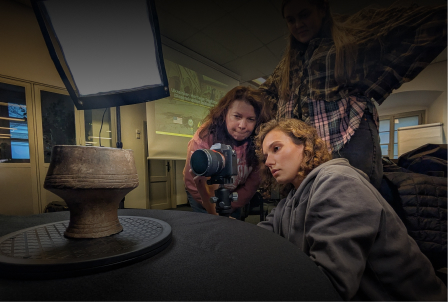
Preserve history with 3D documentation of at-risk cultural sites.
Empower communities with tools and training to protect their heritage.
Inspire audiences with immersive stories that bring the past to life.
Every contribution helps to preserve and celebrate the world’s cultural wonders.
Is my donation tax-deductible?
Yes. CyArk is a registered 501(c)(3) nonprofit organization in the United States, and your donation is tax-deductible to the fullest extent allowed by law. After completing your donation, you will receive an email receipt that includes all necessary details for tax purposes.
How does my donation support CyArk?
Your donation helps us document at-risk cultural sites, train local heritage professionals in 3D documentation, and create immersive experiences that inspire and educate. Every contribution fuels our mission to preserve and share the world’s cultural treasures.
Is my payment information secure?
Absolutely. Our donation platform, Donorbox, uses SSL/TLS encryption to ensure your personal and payment information is fully protected. Donorbox is PCI-compliant, meaning it meets the highest standards for secure online transactions, so you can donate with confidence.
Secure donation
Newsletter
Subscribe to our newsletter
Sign up for CyArk’s monthly newsletter to learn about our latest efforts to document sites around the world.
U.S. Virgin Islands
Annaberg Sugar Plantation
Tracing the footsteps of slavery on a Danish sugar plantation
Situated on St. John Island in the eastern Caribbean, the Virgin Islands National Park preserves the ruins of the Annaberg sugar plantation, and is one of the finest remaining example of Danish Colonial Era industrial agriculture in the Virgin Islands. A modest holding when it was established in 1722, the plantation was enlarged and modernized in 1796 when James Murphy purchased and consolidated several plantations, adding one of the largest windmill on the island and a sugar factory. The ruins of the Annaberg plantation encompass the enslaved laborers’ village and factory site where they worked. Overlooking the Bay are the remains of the guardhouse, which ensured the slaves’ captivity. Today, the Annaberg plantation reminds us of the daily lives of an enslaved people and traces their resistance to slavery.