Help protect and share the world’s cultural heritage
Your 100% tax-deductible donation fuels CyArk’s mission to:
Preserve history with 3D documentation of at-risk cultural sites.
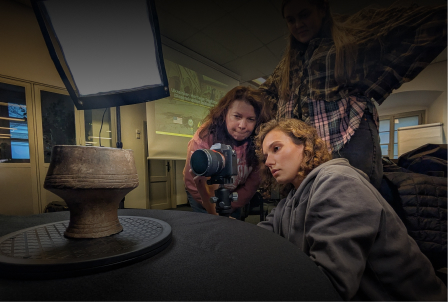
Empower communities with tools and training to protect their heritage.
Inspire audiences with immersive stories that bring the past to life.
Every contribution helps to preserve and celebrate the world’s cultural wonders.
Is my donation tax-deductible?
Yes. CyArk is a registered 501(c)(3) nonprofit organization in the United States, and your donation is tax-deductible to the fullest extent allowed by law. After completing your donation, you will receive an email receipt that includes all necessary details for tax purposes.
How does my donation support CyArk?
Your donation helps us document at-risk cultural sites, train local heritage professionals in 3D documentation, and create immersive experiences that inspire and educate. Every contribution fuels our mission to preserve and share the world’s cultural treasures.
Is my payment information secure?
Absolutely. Our donation platform, Donorbox, uses SSL/TLS encryption to ensure your personal and payment information is fully protected. Donorbox is PCI-compliant, meaning it meets the highest standards for secure online transactions, so you can donate with confidence.
Secure donation
Newsletter
Subscribe to our newsletter
Sign up for CyArk’s monthly newsletter to learn about our latest efforts to document sites around the world.
The ancient city of Bagan, was the political, economic, and cultural center of the Bagan Kingdom from approximately 1044 to 1287 CE. The rulers of Bagan oversaw the construction of over 5,000 religious monuments over an area covering about 65 square kilometers on the Bagan plains. More than 2,000 of the original structures have survived in varying states of repair until the present and can be found in the Bagan Archaeological Zone. The Bagan Kingdom declined due to a number of political and economic factors from the late 1200s and was superceded by several other city-states in the Myanmar central region. It continued as a religious site and experienced a revival of building activity in the 1700s. While Bagan is often described as an archaeological landscape, it is an active heritage site with functioning temples central to the local, national and international Buddhist communities.