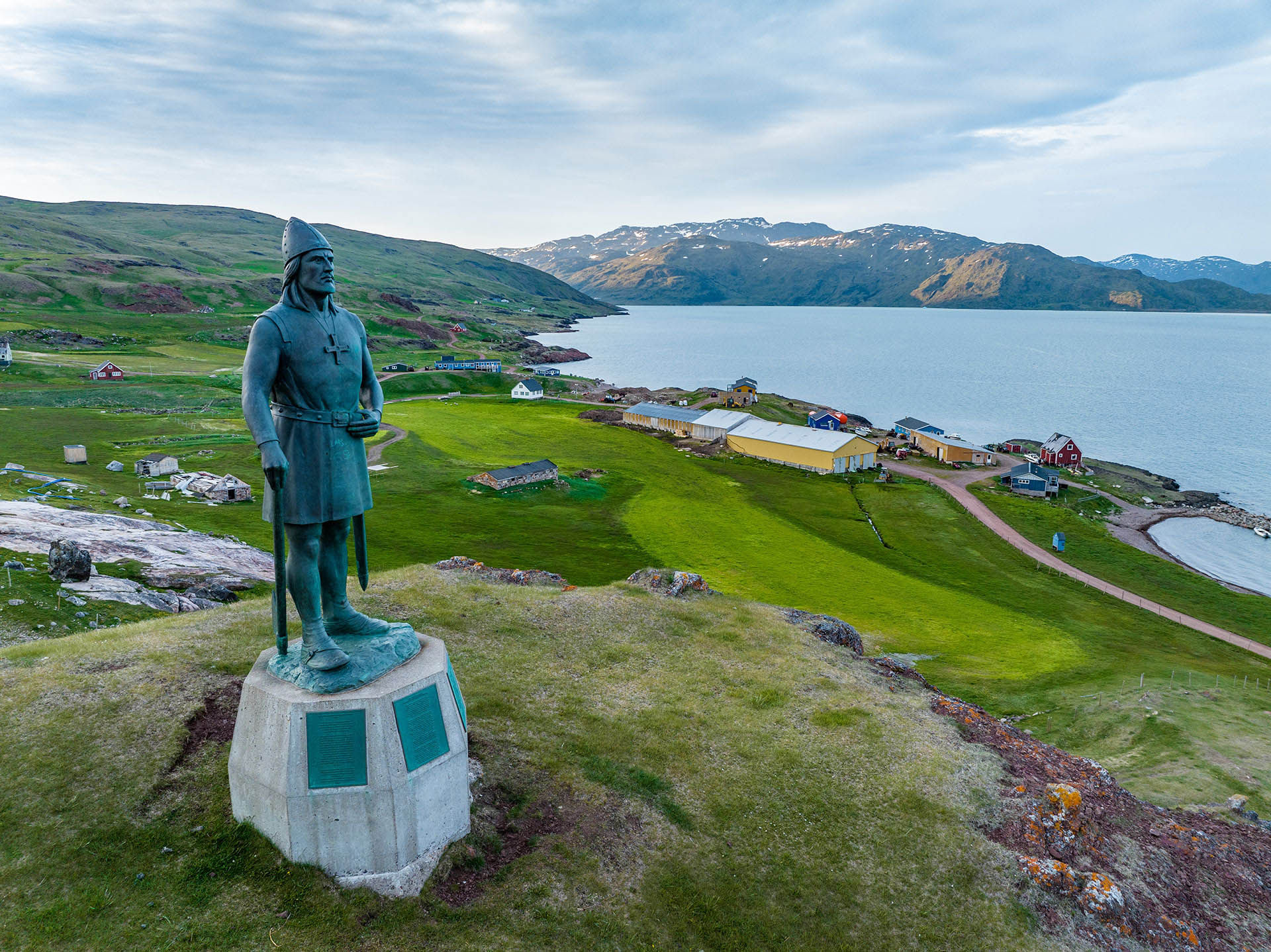
Qassiarsuk, a small settlement in southern Greenland, is a place of significant historical and cultural importance. It is best known as the site of the Norse colony Brattahlíð, established by the Viking explorer Erik the Red around 985 CE, a few years after his exile from Iceland. This area, with its relatively mild climate and fertile land, was the center of Norse colonization in Greenland and played a crucial role in the region's history during the Norse period. Today, Qassiarsuk is notable for its archaeological remains, including ruins of Norse longhouses and a church, which are some of the best-preserved examples of Norse architecture in Greenland. The settlement offers a unique window into the lives of the early Norse settlers in the New World, long before Columbus's voyages. In addition to its historical significance, Qassiarsuk's picturesque landscape, with its green fields and dramatic fjords, makes it a popular destination for visitors. Qassiarsuk is part of Kujataa, a subarctic farming landscape shaped by both Norse and Inuit farmers, which became a UNESCO World Heritage Site in 2017.