Pakistan
Power of the Mughal Empire expressed through religious architecture
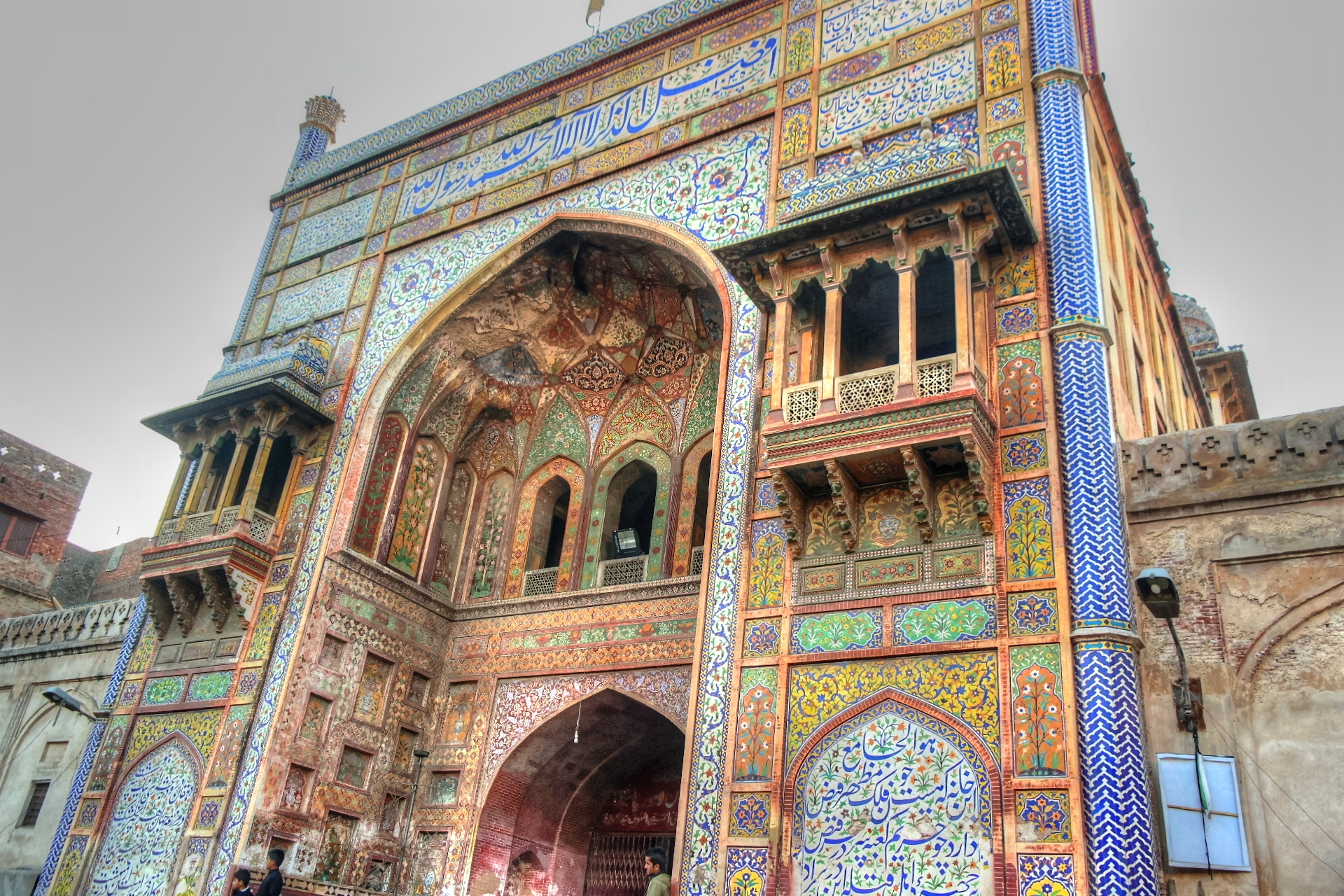
Wazir Khan, the governor of Lahore under the Mughal Emperor Shah Jahan, commissioned this mosque in the walled city of Lahore, in what is now Pakistan. Begun in 1634 CE during a period recognized as an architectural renaissance, the Wazir Khan Mosque embodies the canon of the Mughal architectural style. The intricate scripts, vivid frescos, and brilliant tile work that embellish the mosque employ techniques and motifs from India, Persia and Central Asia. The combination of foreign elements and the exuberance of artistic adornment celebrates both the power of Allah and Islam and the reach of the Mughal Empire.
Today the mosque is part of the thriving community, a living legacy of this artistic renaissance, no longer reserved solely for the elite. After nearly 400 years, however, age, natural forces, and the encroaching city have taken their toll. Minarets lean, cracks climb the walls, and detailed frescos flake away. Contributing to efforts to conserve the mosque, CyArk and the Lahore University of Management Sciences partnered to scan the entire site in 3D during the summer of 2015. The data collected provide complete structural details that will inform long term planning for the mosque’s preservation.