Help protect and share the world’s cultural heritage
Your 100% tax-deductible donation fuels CyArk’s mission to:
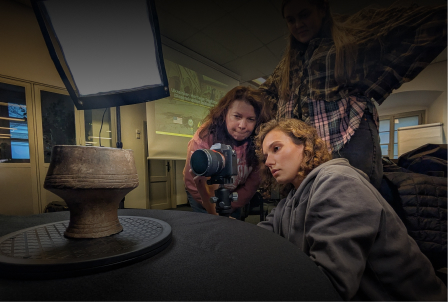
Preserve history with 3D documentation of at-risk cultural sites.
Empower communities with tools and training to protect their heritage.
Inspire audiences with immersive stories that bring the past to life.
Every contribution helps to preserve and celebrate the world’s cultural wonders.
Is my donation tax-deductible?
Yes. CyArk is a registered 501(c)(3) nonprofit organization in the United States, and your donation is tax-deductible to the fullest extent allowed by law. After completing your donation, you will receive an email receipt that includes all necessary details for tax purposes.
How does my donation support CyArk?
Your donation helps us document at-risk cultural sites, train local heritage professionals in 3D documentation, and create immersive experiences that inspire and educate. Every contribution fuels our mission to preserve and share the world’s cultural treasures.
Is my payment information secure?
Absolutely. Our donation platform, Donorbox, uses SSL/TLS encryption to ensure your personal and payment information is fully protected. Donorbox is PCI-compliant, meaning it meets the highest standards for secure online transactions, so you can donate with confidence.
Secure donation
Newsletter
Subscribe to our newsletter
Sign up for CyArk’s monthly newsletter to learn about our latest efforts to document sites around the world.
Founded in 500 BCE and continuously inhabited for over twelve hundred years, Monte Albán was the ancient capital of the Zapotec culture and is one of the oldest-known urban cities in Mesoamerica. The civic core is centered around a plaza and most of the city's great monumental structures are built in its vicinity. It is estimated that approximately 30,000 people lived within a six-kilometer radius of this center during the city's peak in the 6th century CE. Sometime between 700 and 800 CE, the ruling Zapotec lineage at Monte Albán collapsed, construction halted, and the city fell into decline. Today, the site remains a source of great pride for the peoples of Oaxaca, particularly the Zapotec-speakers that still farm the fields on the valley floor below.